10
Dec
Dec
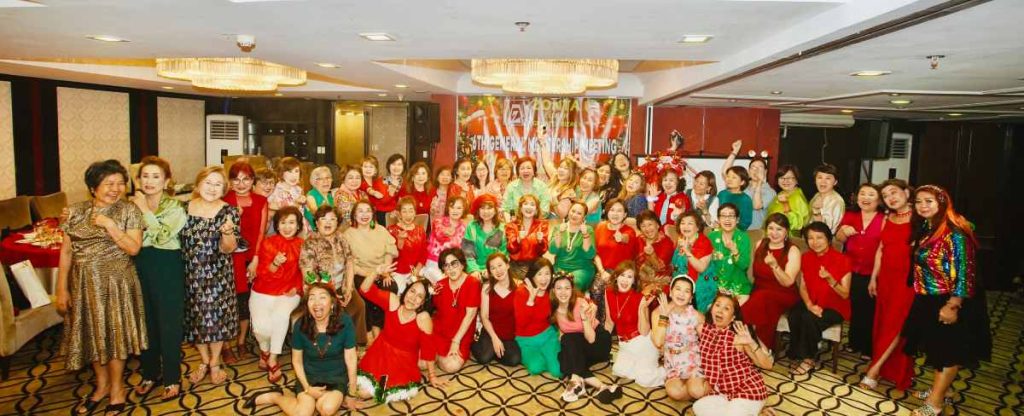
December 10, 2024 | Zonta Club of Greater Rizal 2 – 2024 Christmas Party
December 10, 2024 | Zonta Club of Greater Rizal 2 – 2024 Christmas Party
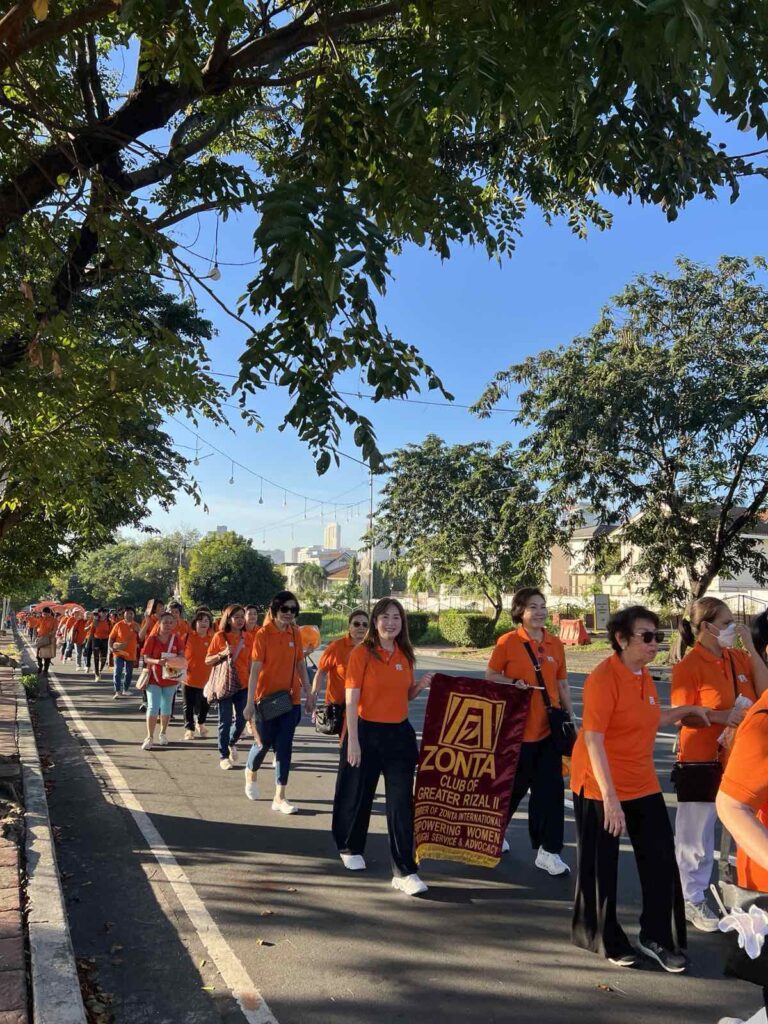
At Zonta Club of Greater Rizal II, we stand firmly against the pervasive issue of street harassment, which continues to undermine the safety, dignity, and rights of women and girls in the Philippines. Despite legal protections like the Safe Spaces Act, cultural attitudes and normalized behaviors perpetuate an environment where harassment is dismissed as trivial or even flattering. As we march in the streets for women’s equality—streets that, for many women, symbolize fear and harassment—we reaffirm our commitment to saying NO to discrimination and unsafe spaces for women and girls. The Prevalence of Street Harassment The statistics on street harassment in the Philippines reveal a troubling reality: 88% of women aged 18-24 reported experiencing sexual harassment at least once in their lives, according to a Social Weather Stations (SWS) survey. This figure highlights the alarming scale of the issue, especially in urban areas【1】【5】. A separate study found that three out of five women in Quezon City have experienced harassment such as catcalling, stalking, and groping. Among young women, the prevalence rises to a staggering 88%【1】【5】. Since the Safe Spaces Act was enacted, the Philippine National Police (PNP) has documented over 12,492 incidents of violence and harassment against women in less than three years—a sobering reminder of the ongoing battle for safe public spaces【1】. Why Zonta Says NO Street harassment is not a compliment or a joke—it is a form of violence that perpetuates fear, limits women’s freedom, and undermines their rights. By trivializing such acts, society places the burden on women to endure, dismiss, or avoid harassment, rather than addressing the behaviors of perpetrators. At Zonta Club of Greater Rizal II, we march because: We refuse to normalize harassment. Catcalling, stalking, and groping are not trivial actions; they are violations of personal boundaries and safety. We demand safe spaces for women and girls. Public spaces should be places of opportunity, not fear. We advocate for accountability. Laws like the Safe Spaces Act are critical, but societal change is equally important to ensure enforcement and challenge harmful cultural norms. The Streets Are for Everyone As we marched in solidarity for women’s equality, we walked the same streets where many women face daily harassment. This juxtaposition serves as a powerful reminder of why our advocacy is so crucial. Women deserve to feel safe in every space they occupy—whether walking to work, commuting, or simply living their lives. Building a Future Without Fear To create truly safe spaces for women and girls, we must: Raise Awareness: Start conversations about the harmful impact of harassment and challenge its normalization. Empower Women: Support victims of harassment, encouraging them to speak out and seek justice. Engage Communities: Promote respect and accountability through education and dialogue. Through Zonta’s Zonta Says NO to Violence Against Women campaign, we are amplifying the voices of women and girls and advocating for a future free from fear and harassment. Together, we can foster a society where public spaces are safe, equitable, and inclusive for everyone. Join Us in Saying NO The fight for safe spaces and gender equality requires collective action. Let’s work together to ensure that women and girls can walk the streets with confidence, knowing their rights are protected and respected. 📸 View photos of Zonta Club of Greater Rizal II marching for equality in the streets we aim to reclaim as safe spaces for all women and girls. Citations: [1] https://philarchive.org/archive/PAGDOC [2] https://stopstreetharassment.org/resources/statistics/statistics-academic-studies/ [3] https://www.reddit.com/r/Philippines/comments/z251ll/body_shaming/ [4] https://www.philstar.com/the-freeman/cebu-entertainment/2024/12/02/2404462/could-recent-controversies-finally-spark-metoo-movement-philippines [5] https://asiapacific.unwomen.org/en/news-and-events/stories/2016/06/using-technology-to-address-sexual-harassment-of-women-in-public-places [6] https://serp-p.pids.gov.ph/publication/public/view?slug=manila-philippines [7] https://eprajournals.com/IJMR/article/11654/download
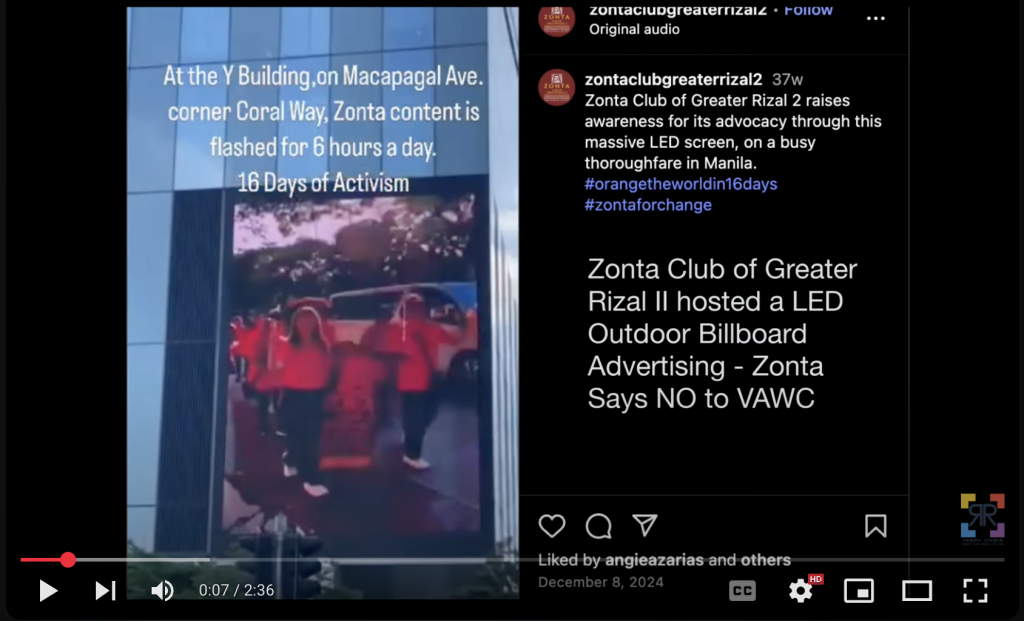
Project Title: 16 Days of Activism: LED Outdoor Billboard Advertising Description: In support of the “16 Days of Activism Against Gender-Based Violence” campaign, our club produced a 2.5-minute advocacy video which was prominently featured on an LED advertising billboard located at Coral Way corner Macapagal Avenue—a high-traffic area traversed by thousands of vehicles daily. The advocacy material was broadcast for 6 hours each day from December 2 to 10, amplifying our message to a wide public audience and raising awareness about the urgent need to end violence against women and girls. This project exemplified the use of mass media as a powerful tool for advocacy and public engagement.

November 30, 2025 | 4th Monthly Area Meeting

Over the past five years, Zonta International has championed the fight against gender-based violence (GBV) and child marriage, particularly in the Philippines. Through its advocacy efforts and the annual 16 Days of Activism Against Gender-Based Violence, Zonta has achieved significant milestones, fostering social change and legislative progress to protect women and children globally and locally. Key Milestones in Combating GBV 1. The 16 Days of Activism Campaign The 16 Days of Activism Against Gender-Based Violence, which runs from November 25 (International Day for the Elimination of Violence Against Women) to December 10 (Human Rights Day), has been a central platform for Zonta’s advocacy. 2020: The Zonta Club of the Philippines, led by Zonta Cebu, led the campaign with initiatives addressing child marriage, advocating for the Girls Not Brides Bill. This legislative effort aimed to address the alarming prevalence of child marriage, as the Philippines remains among the top countries globally for child brides . 2022–2023: Zonta Clubs continued their advocacy, emphasizing the importance of legislation prohibiting child marriage. They expanded their campaigns to include support initiatives, such as blood donation drives for GBV survivors and educational summits for youth empowerment . 2. Legislative Advocacy Against Child Marriage Zonta Philippines has worked tirelessly to promote legislative changes aimed at ending child marriage: Promotion of the Girls Not Brides Bill: This bill advocates for a minimum marriage age of 18 years without exceptions. Zonta’s efforts have included lobbying local government units, organizing forums, and conducting educational seminars to raise awareness of the dangers of child marriage . Collaboration with NGOs and Government Agencies: Zonta partnered with UNICEF and other organizations to strengthen community-based programs that educate families about the negative impacts of early marriage on girls’ health, education, and safety. These partnerships have reinforced national campaigns like Zonta Says NO to Violence Against Women . 3. Community Awareness and Social Change Initiatives Through its local clubs, Zonta Philippines has implemented numerous programs to foster awareness and societal transformation: Youth Engagement and Educational Seminars: Initiatives like the “EmpowerHER” summit in 2021 brought together over 160 young participants to discuss the long-term impacts of child marriage and GBV, empowering them with knowledge about their rights . Mental Health and Children’s Rights Workshops: Zonta Clubs have also conducted workshops to address mental health issues, promoting resilience among vulnerable communities while highlighting the intersection of mental health and GBV prevention . Social Media Advocacy: Clubs have leveraged online platforms to amplify their message, engaging younger audiences and encouraging wider community participation in their campaigns . Global Collaboration Zonta International’s commitment to ending GBV extends beyond the Philippines. Their global collaboration with UNICEF focuses on addressing child marriage in countries like Nepal and promoting educational and policy-driven solutions to this persistent issue . This global perspective complements the localized efforts of Zonta Clubs in the Philippines, creating a unified strategy to end GBV. Impact of Zonta’s Efforts Zonta International’s initiatives have achieved significant outcomes in combating GBV and child marriage: Increased Awareness: Zonta’s campaigns have sparked critical discussions around women’s rights and empowerment, particularly in communities where GBV and child marriage are prevalent. Legislative Influence: Advocacy for laws like the Girls Not Brides Bill has drawn national attention, catalyzing progress in protecting young girls from early marriage and domestic violence. Strengthened Community Engagement: Events like educational summits, blood drives, and barangay recognition programs have galvanized collaboration among local governments, NGOs, and community members. Since the inception of our 16 Days of Advocacy, Zonta Club of the Philippines has been spearheading major changes when it comes to the rights of women and girls in the Philippines. Now on our fifth year, we continue raising the call for changes to keep being made in order to safeguard Women and Girls. No one should be left behind, and we invite everyone to join us in continuing the fight! Citations: Zonta Club of Cebu II’s GBV Advocacy Zonta International’s Collaboration with UNICEF Zonta’s Campaigns Against GBV Zonta Club of Central Tuguegarao’s Activities
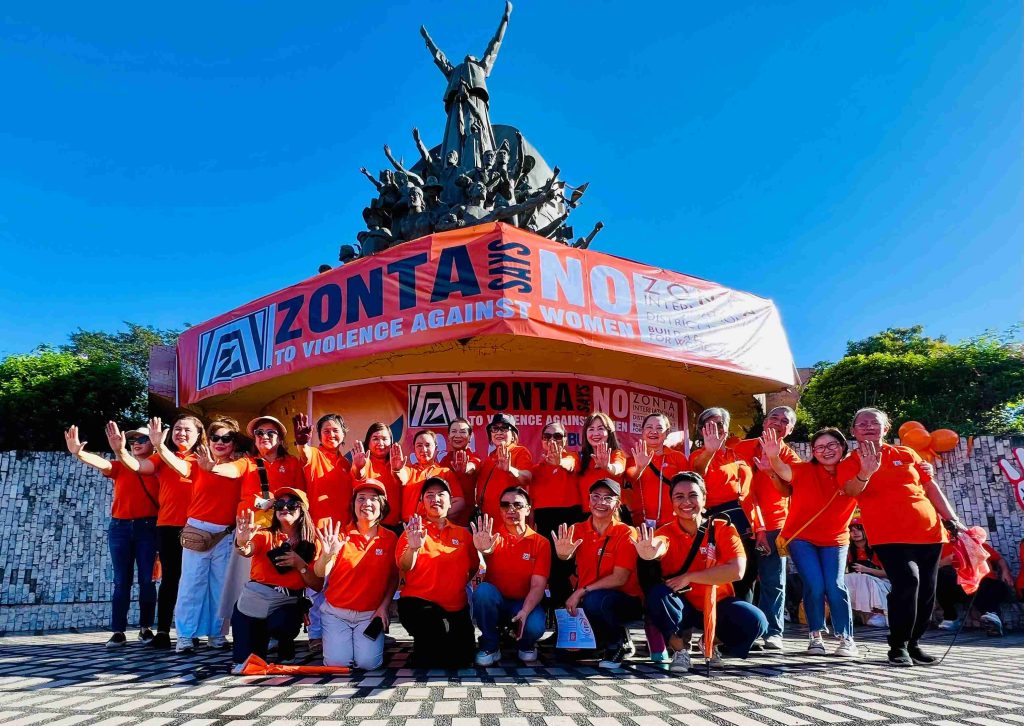
Project Title: 16 Days of Activism: Zonta Says NO – Women’s Walk Description: In solidarity with the global campaign “16 Days of Activism Against Gender-Based Violence,” Zonta Clubs in Area 1 united to stage a symbolic walk culminating at the People Power Monument. This collective action served as a powerful statement to say NO to violence against women and girls. The event brought together Zontians, partners, and advocates to raise awareness, inspire change, and reaffirm their commitment to ending gender-based violence. The walk was not only symbolic but also a call to action for communities and leaders to stand up for the rights, safety, and dignity of women and girls.